
Search This Supplers Products:industrial videoscope manufacturerjoystick borescopesRVI inspection instrumentNDT equipmentwifi borescopeIR videoscope
Industrial Borescope Guide | Types, Key Specs & How to Choose | JEET
time2026/06/05
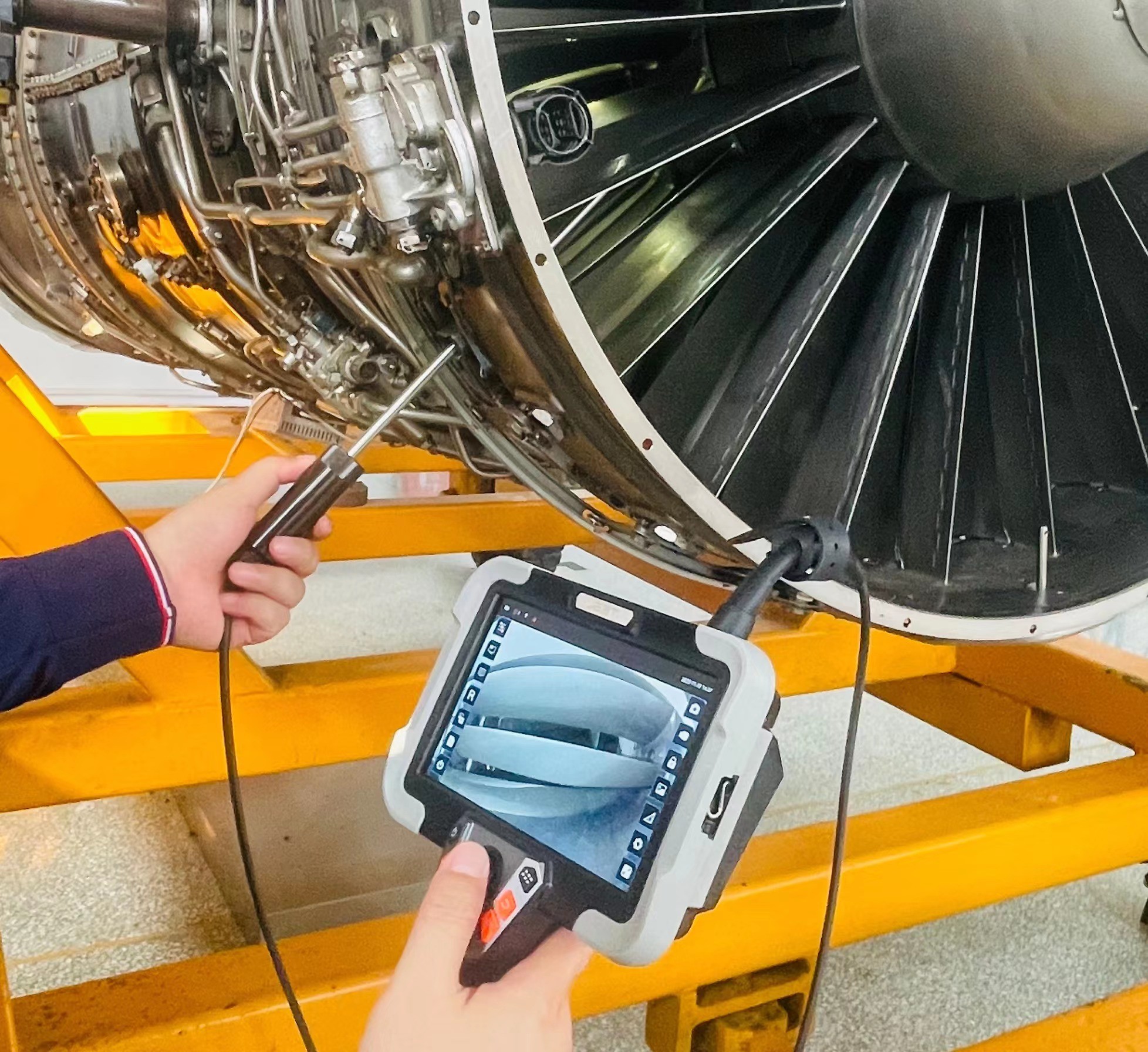
- Comprehensive guide to industrial borescopes: compare 4 types, understand 8 critical specs, and learn how to choose the right model for aerospace, oil & gas, and automotive inspection.
Whether you need to inspect a jet engine turbine blade, a subsea pipeline weld, or a precision gear cavity, the right industrial borescope makes the difference between a confident pass/fail decision and costly guesswork. This guide covers everything MRO engineers, NDT technicians, and procurement managers need to know — from core optical principles to the exact specifications that separate adequate from outstanding.
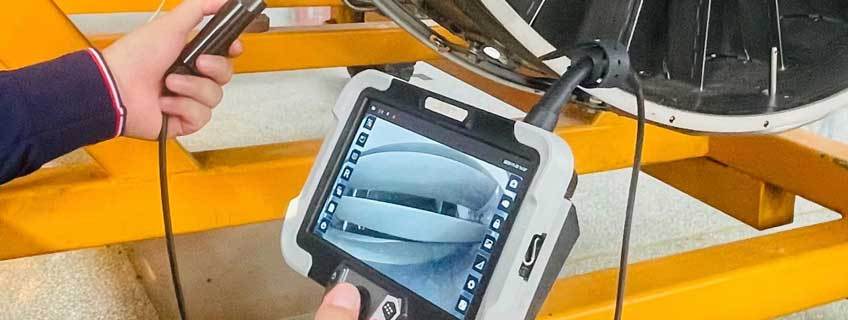
1. What Is an Industrial Borescope?
An industrial borescope is a remote visual inspection (RVI) instrument designed to examine the internal surfaces of components, cavities, and structures that are otherwise inaccessible to the naked eye. It combines a flexible or rigid insertion tube, an illumination source, and an imaging system — delivering real-time video or still images from inside engines, pipes, pressure vessels, and complex assemblies.
Originally developed for military aircraft maintenance in the 1960s, industrial borescopes have evolved into sophisticated digital systems with HD and 4K imaging, articulating probes, 3D measurement capability, and — increasingly — AI-assisted defect detection.
Unlike medical endoscopes, industrial variants are engineered to operate in harsh conditions: extreme temperatures, oil contamination, tight radii, and long insertion distances measured in meters rather than centimeters.
Quick definition: A borescope is essentially a long-reach camera system purpose-built for industrial non-destructive testing (NDT) and remote visual inspection.
2. Types of Industrial Borescopes
Not all borescopes are built the same. Understanding the four main categories is the first step toward a correct selection.
2.1 Rigid Borescopes
Rigid borescopes use a stainless steel tube housing a rod-lens optical system. They deliver exceptional image quality and brightness, making them preferred when the inspection path is straight.
Best for: Cylinder bores, gun barrel inspection, injection mold cavities, straight pipe sections.
Limitations: Cannot navigate bends; limited by tube length and rigidity.
2.2 Flexible Fiberscopes
Fiberscopes transmit images through a coherent fiber optic bundle. The insertion tube is fully flexible, allowing navigation around bends — though image resolution is constrained by fiber count.
Best for: Long-reach inspections, complex routing paths, legacy applications.
Limitations: Pixelated "honeycomb" image pattern; fibers degrade over time.
2.3 Video Borescopes (Videoscopes)
Video borescopes integrate a CCD or CMOS sensor directly at the distal tip, delivering high-resolution digital video. 4-way articulation, LED illumination, and on-board recording.
Best for: Aerospace MRO, turbine inspection, automotive QC, petrochemical maintenance.
Key advantage: Best image quality; supports on-device measurement and documentation.
2.4 Semi-Rigid Borescopes
Semi-rigid borescopes fall between rigid and flexible. The tube can be manually shaped before insertion but does not offer active tip articulation. Cost-effective for moderately curved paths.
Best for: Automotive maintenance, HVAC inspection, plumbing with moderate bends.
Limitations: No real-time tip steering; single manual shape only.
3. Key Technical Specifications Explained
When evaluating industrial borescopes, eight specifications determine whether the tool is fit for purpose.
4. Top Applications by Industry
4.1 Aerospace and Aviation MRO
Gas turbine engines require periodic borescope inspection per airworthiness directives. Critical zones include:
- Compressor fan blades and vanes (FOD damage, erosion)
- Combustion liner and nozzle guide vanes (cracking, burn-through)
- High-pressure turbine (HPT) blades (tip cracking, coating spallation)
- Accessory gearbox internal surfaces
Regulatory requirements (FAA AC 43.13, EASA Part-145) mandate documented photographic evidence — making video borescopes with HD recording standard in all certified MRO facilities.
4.2 Oil, Gas, and Petrochemical
Pipeline internal corrosion and weld integrity inspection represent the largest single market segment by unit volume. Common applications:
- Heat exchanger tube bundles
- Reactor vessel nozzle welds
- Produced water injection lines (internal pitting)
- Flare tip burner orifices
Long working lengths (3–10 m) and ATEX-rated units are frequently required in this sector.
4.3 Automotive Manufacturing and Quality Control
End-of-line quality gates use borescopes to verify:
- Cylinder bore surface finish after honing
- Oil gallery passage cleanliness
- Casting porosity in cylinder heads and engine blocks
- Weld penetration in chassis assemblies
4.4 Power Generation
Steam turbines, gas turbines, and generator rotors require scheduled visual inspection without full disassembly. Borescopes access through existing ports, saving days of outage time per unit.
4.5 Defense and Naval
Barrel rifling inspection, breech mechanism examination, and naval vessel pipe system surveys represent specialized applications with strict IP and high-temperature requirements.
5. How to Choose the Right Industrial Borescope
Use this six-step decision framework to narrow selection systematically.
Define the minimum passage diameter
Measure the smallest aperture the probe must pass through. Select a probe diameter at least 0.5 mm smaller to allow for tip articulation clearance.
Determine required working length
Identify the deepest inspection point. Add 20% to account for routing losses around bends.
Assess articulation requirements
If the inspection path requires navigating more than one bend, 4-way articulation with ≥160° range is non-negotiable.
Specify environmental constraints
Hazardous atmosphere → ATEX rating required. Probe contacts fluids above 80°C → high-temperature probe materials. Outdoor use in rain → IP67 for control unit.
Determine measurement requirements
Documentation only → HD recording is sufficient. Quantitative defect sizing → stereo or 3D phase-shift module. AI-assisted flagging → integrated defect recognition software.
Evaluate total cost of ownership
Probe replacement cost, tip repair service availability, and software update policy are as important as purchase price — especially for high-frequency MRO operations.
6. Our Industrial Borescope Models
At JEET, we design and manufacture industrial borescopes for the world's most demanding inspection environments. Every product is engineered and validated at our facility in Shenzhen China, with CE, RoHS, compliance."
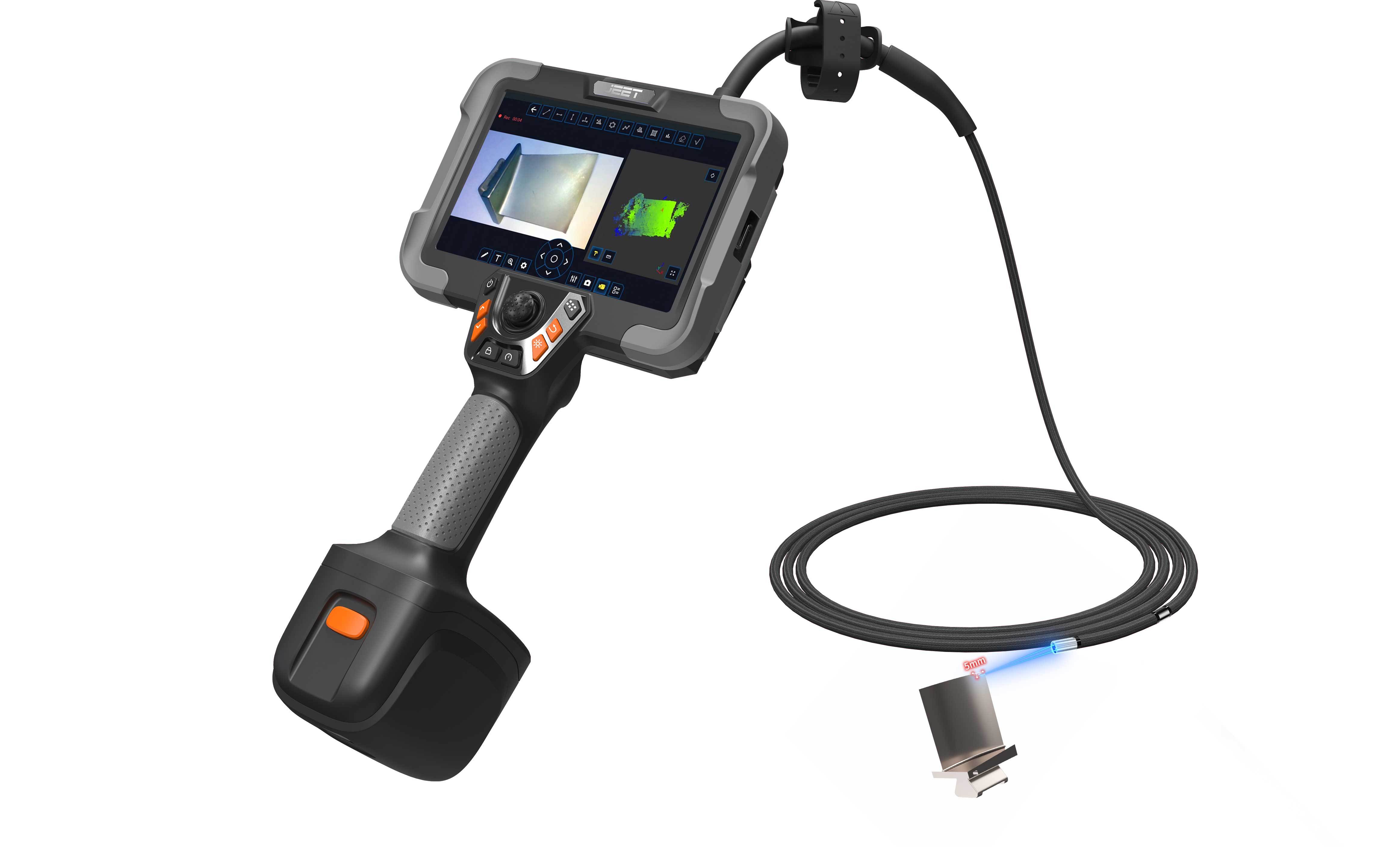
Not sure which model fits your application?
Send us your probe diameter requirement, working length, and target environment — our applications team will recommend the right configuration within one business day.
Request a recommendation →7. Frequently Asked Questions
Summary
Selecting an industrial borescope comes down to five parameters: minimum probe diameter, required working length, articulation capability, environmental rating, and measurement accuracy. For most aerospace and heavy-industry applications, a 4-way articulating HD video borescope — backed by robust probe repair support and clear certification documentation — delivers the best long-term inspection ROI.
JEET manufactures a full range of industrial borescopes built for these requirements, with direct technical support and global shipping from Shenzhen , China.
Request a quote or free application consultation →